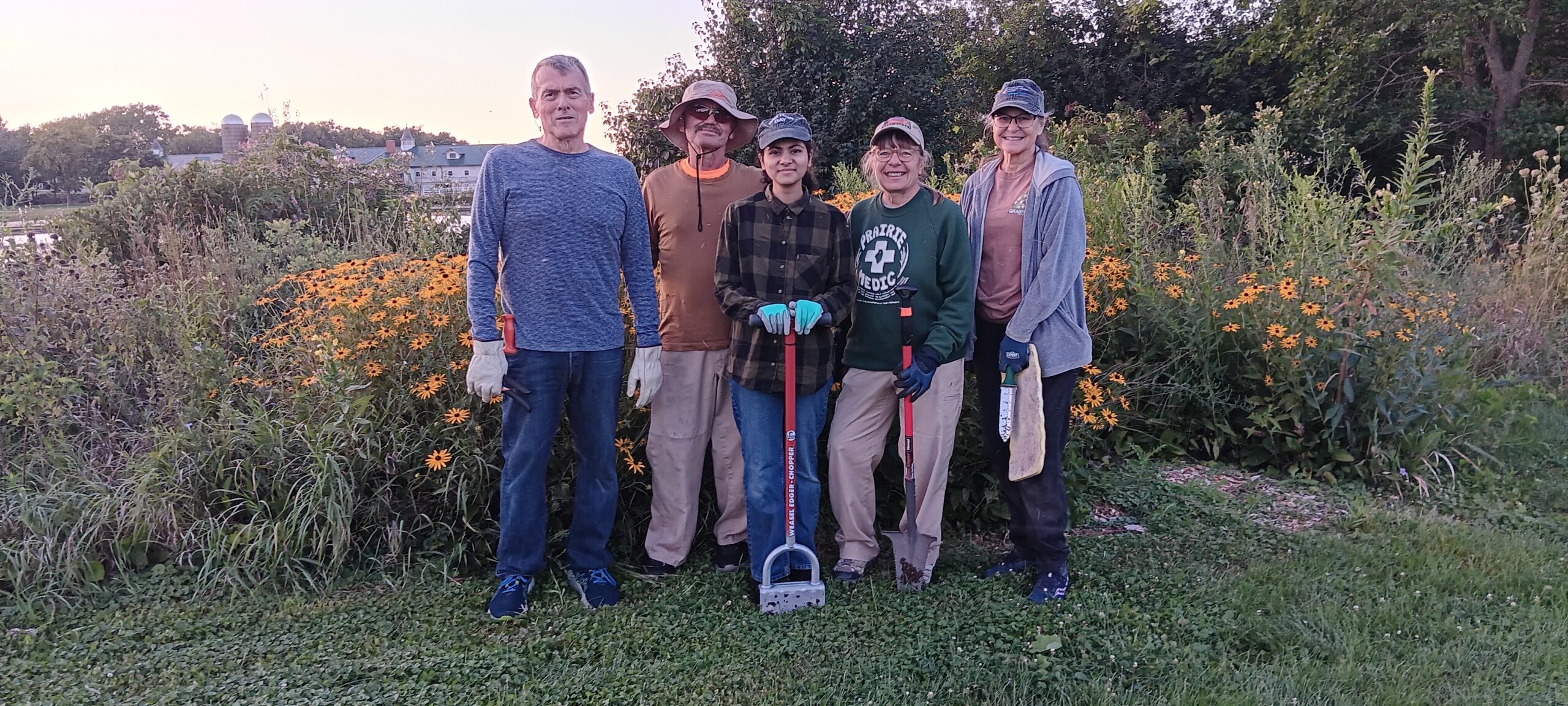
Small Waters Education made great strides in 2025, thanks to our volunteers, board members and supporters. One of the ways we promote mutually beneficial relationships between humans and the rest of nature is by designing, planting and tending native gardens in community spaces. Since 2021, we have worked with the coalition Conversación de Conservación, reaching out to the Latino community along with the Friends of Hackmatack National Wildlife Refuge, The Land Conservancy of McHenry County , the Environmental Defenders of McHenry County, and the McHenry County Conservation District. Our role in this collaboration is to help lead the kids in the Youth and Family Center of McHenry County summer program in expanding the garden along the pond shore at Petersen Park in McHenry IL.
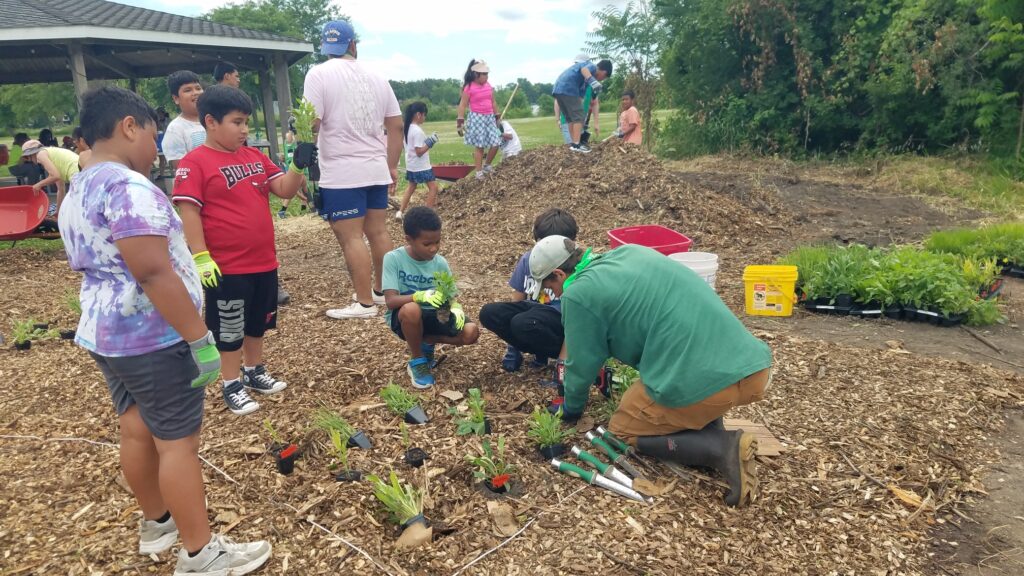
In another project with the Friends of Hackmatack and the Village of Richmond, we designed and led the planting of a Pocket Refuge at McConnell Park and trained a team of local volunteers in garden maintenance.
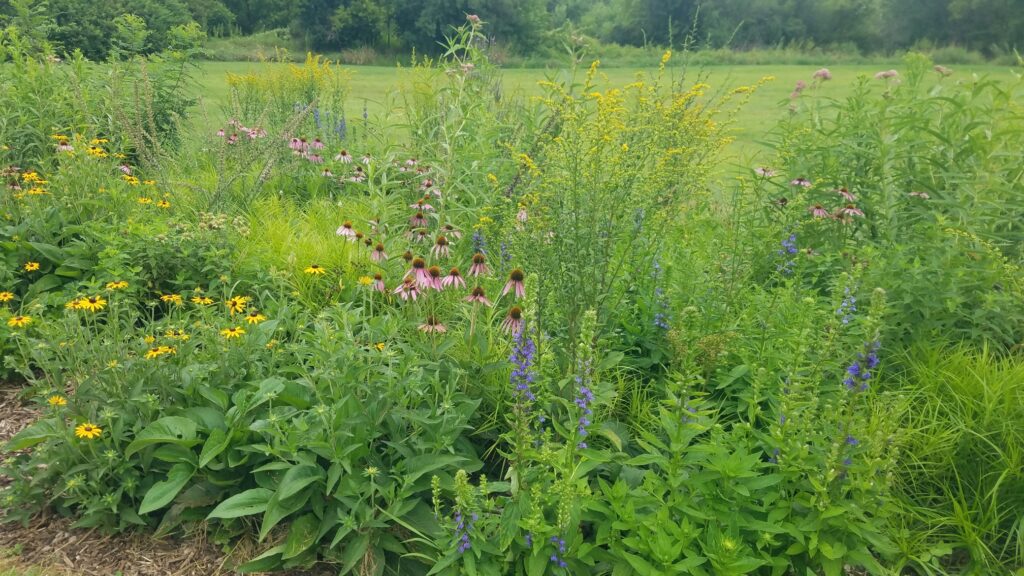
Members of Northwestern Medicine’s Sustainability Council contacted Small Waters Education for advice on transforming some of the lawn at Woodstock Hospital to native plants. They chose an area next to the patio used by patients, staff and visitors, and we designed a garden and guided the planting by volunteers from the hospital. We also gave some advice for a planting along a walking path at McHenry Hospital. If these plantings are successful, their goal is to replace more lawn with natives.
Besides Northwestern Medicine, we provided consultation on native gardens for Harvard Diggins Library and Bull Valley Garden Club.
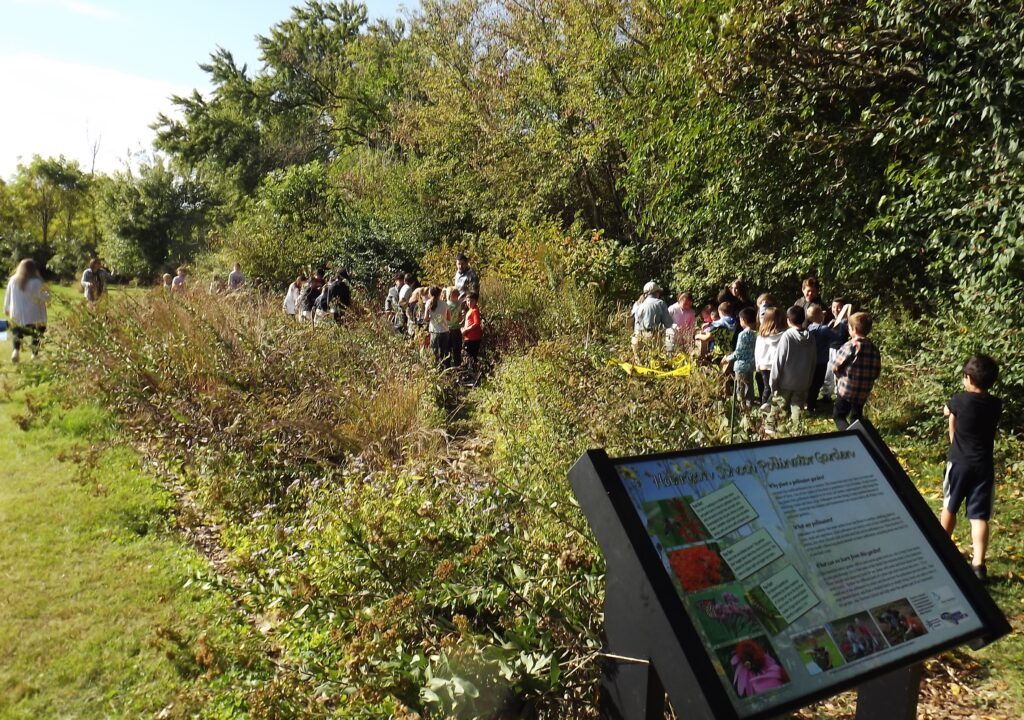
We continued to build the network of Neighbors Helping Pollinators, organizing teams of volunteers to take care of pollinator gardens at 4 schools that we helped plant over the past 10 years. Team members share skills in plant identification and best management practices, and take home extra plants and seeds for their own gardens.
As part of our efforts to help the schools to utilize these gardens as outdoor classrooms, we assisted 2nd and 6th graders at Harrison School in Wonder Lake in collecting seed to grow their own plants.
Our volunteers processed and packaged seeds from these gardens and gave away hundreds of packs at conferences like the Great Seed Event and Green Living Expo.
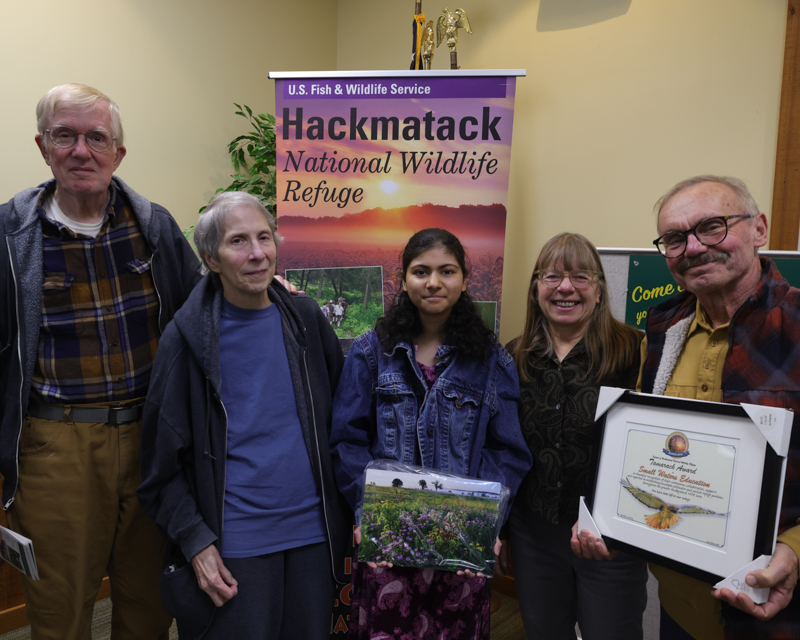
For these efforts, Small Waters Education received a Tamarack award from Friends of Hackmatack National Wildlife Refuge at their annual meeting in November.
Pollinator Week (June 16-22) was a big deal in McHenry County. Among the many activites, 11 local libraries hosted showings of “What’s the Rush?” a video about how we can save biodiversity in our own yards and neighborhoods. Small Waters Education donated plants for giveaways at these showings, donated books on the topic, and helped facilitate three of the showings.
Our Annual Gathering in April was a wonderful day of celebrating the Small Waters Education community. A diverse panel of local grassroots leaders shared their perspectives on building healthy resilience during challenging times.
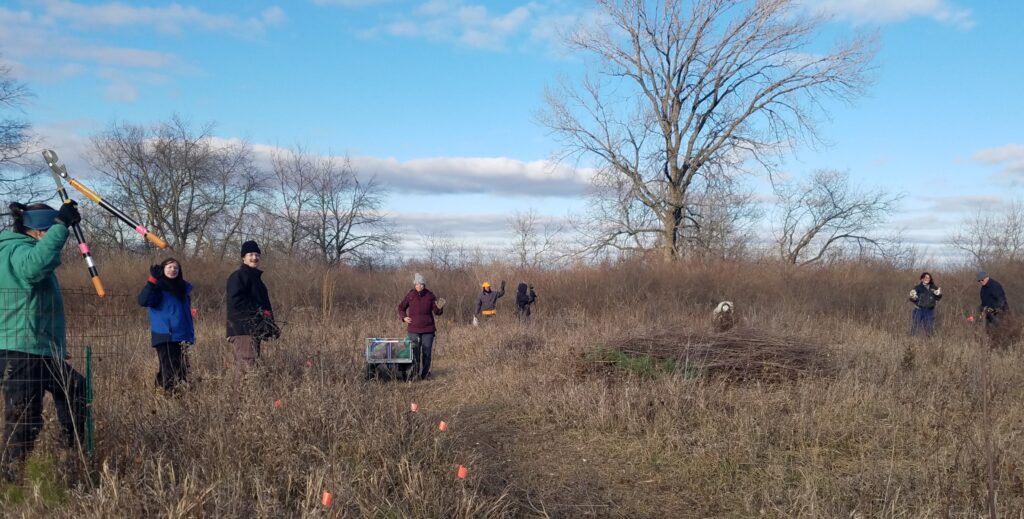
We continued leading volunteers in saving biodiversity at the Alden Sedge Meadow Conservation District site. At our monthly restoration days, we removed invasive plants to allow native species to establish.
Our members staffed tables to reach out and educate visitors at these events: the Great Seed Event, the Natural Landscaping Seminar, McHenry County Libraries United event, Gardenfest, Green Living Expo, and Wild Ones Lake to Prairie Conference.
We hosted several Deep Ecology events, connecting our minds, hearts, bodies and spirits with the rest of the natural world. The Perihelion in January was a gathering on Zoom with a presentation by Michael Pierre Price, artist, mathematician, physicist and sacred pipe carrier. (Here is a link to the video of this fascinating conversation featuring his digital art.) The Aphelion in July was a drum circle in the oak savanna where we all created rhythms together and an ephemeral artwork with natural materials. We also facilitated drum circles in March and September.
Through all of these activities in 2025, Small Waters Education helped humans to participate more fully in the unfolding story of the land, taking our place as a keystone species in the ecosystem by helping it thrive.